Overview
Redesigning onboarding for the overwhelmed digital creative
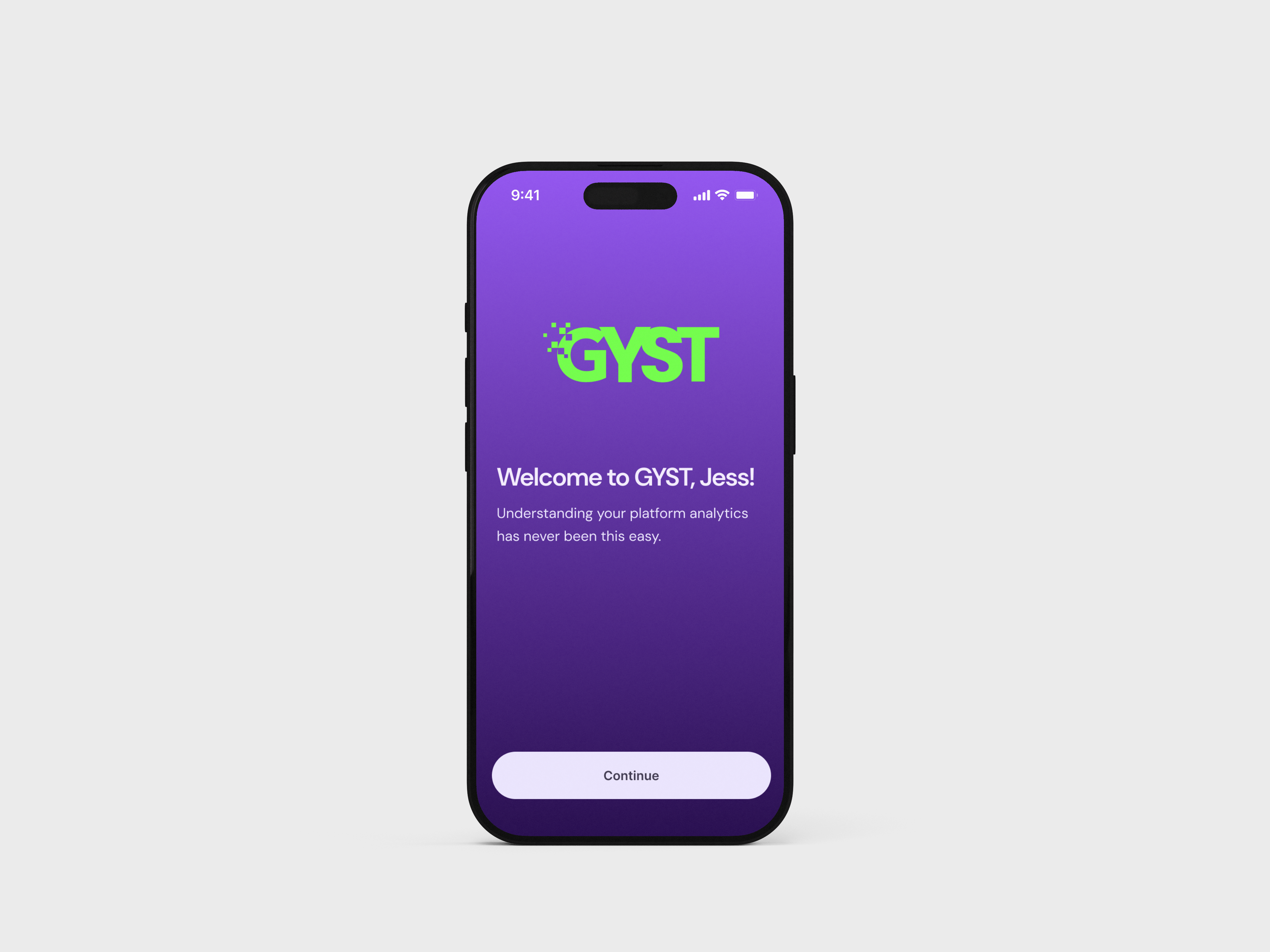
GYST is an AI-powered revenue intelligence tool for elite content creators. It functions as a conversational CFO that translates complex business data from multiple platforms into plain language insights. The redesign challenge focused on first-time user onboarding: welcoming someone brilliant at building but deeply intimidated by data.
This case study documents how accessibility, narrative structure, and emotional trust can reshape a product's first impression, and what I learned about cognitive ease along the way.
The Problem
Built for analysts, not creators
Top 5% content creators manage revenue across eight or more platforms simultaneously, such as YouTube Studio and Patreon. Yet existing analytics tools are static, text-heavy, and cognitively demanding — built for data analysts, not people who built a business through instinct, creativity, not to mention hustle. A powerful tool means nothing if users abandon it during onboarding.
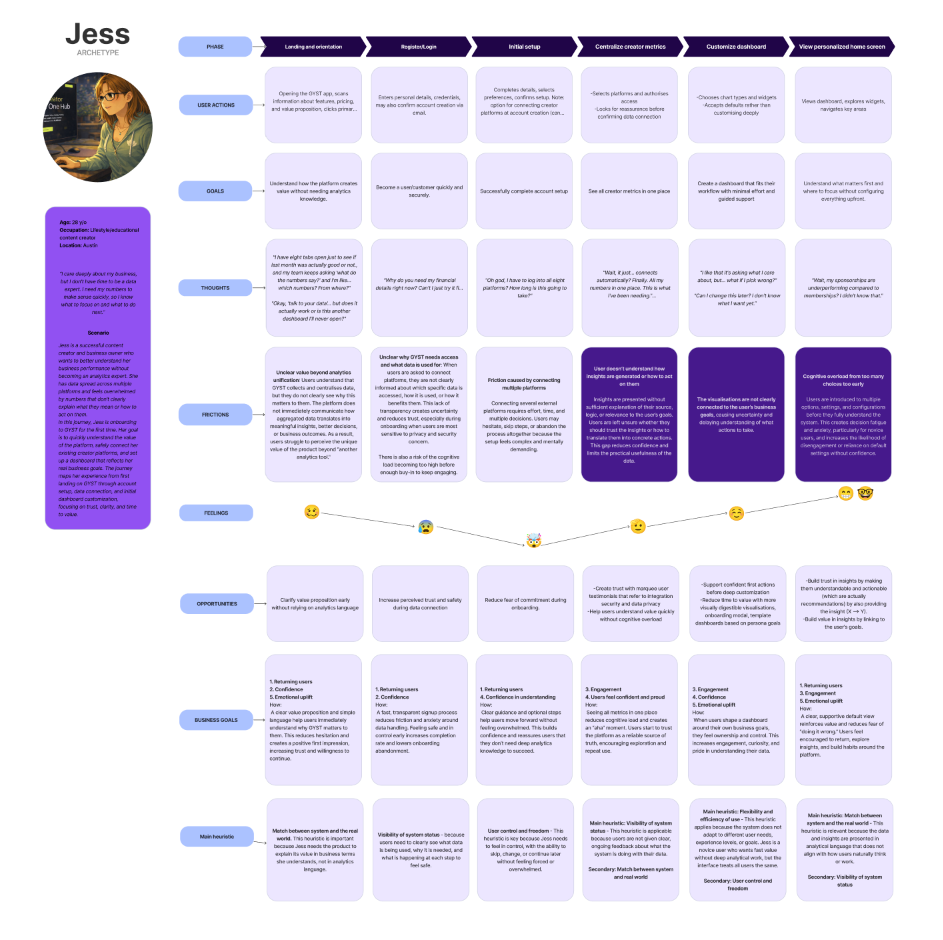
Three critical friction points emerged:
- Cognitive overload at first contact: too much information before users understand the value
- No clear value moment: setup requires effort before anything useful appears
- Platform fragmentation: connecting data sources feels burdensome and technical
User Persona
Meet Jess
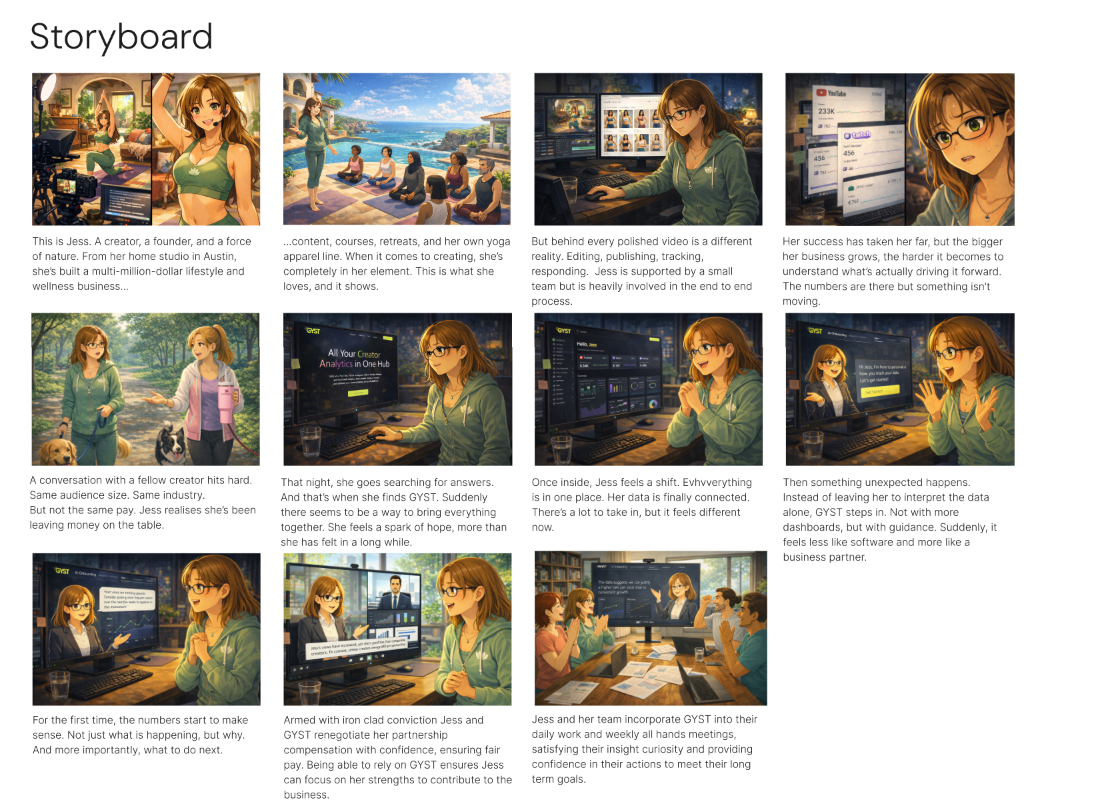
Jess is a US-based creator-operator running a multi-platform media and wellness business generating between $10M and $500M annually with a small, high-leverage team. She makes decisions about sponsorships and strategy, often without complete data. She's not analytically trained. She's dyslexic. And she built something remarkable despite feeling uncertain about her own business.
"i built a million-dollar business but feel stupid looking at a spreadsheet."
Jess became the design compass. Every decision was filtered through one question: does this make Jess feel capable, or behind?
Design Solution
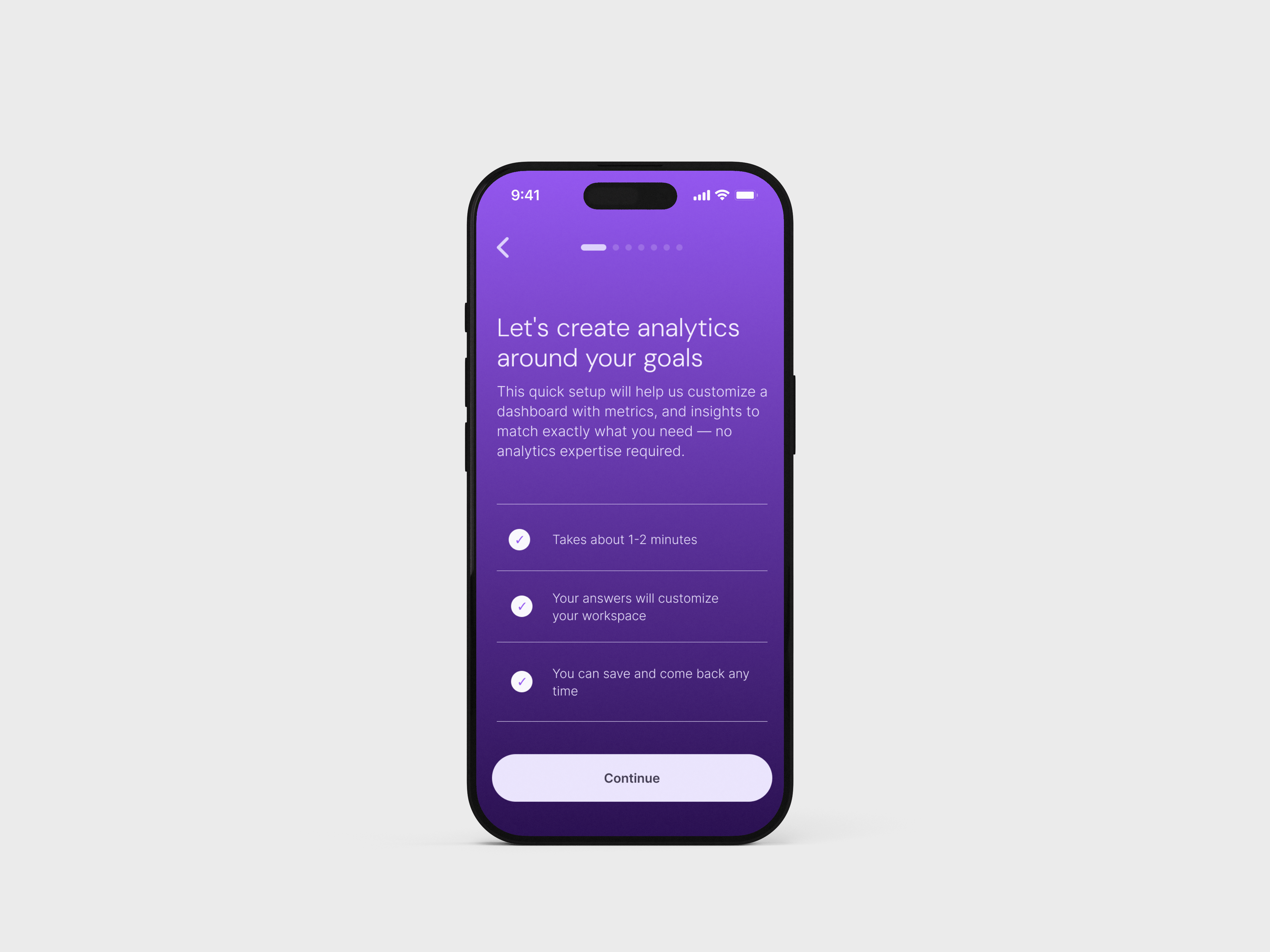
Three-stage onboarding: earn trust before asking for effort
The redesign restructured onboarding around progressive disclosure, showing value before requesting configuration.
- Stage 1: Soft setup Connect platforms, get data flowing. Immediate value before any customization.
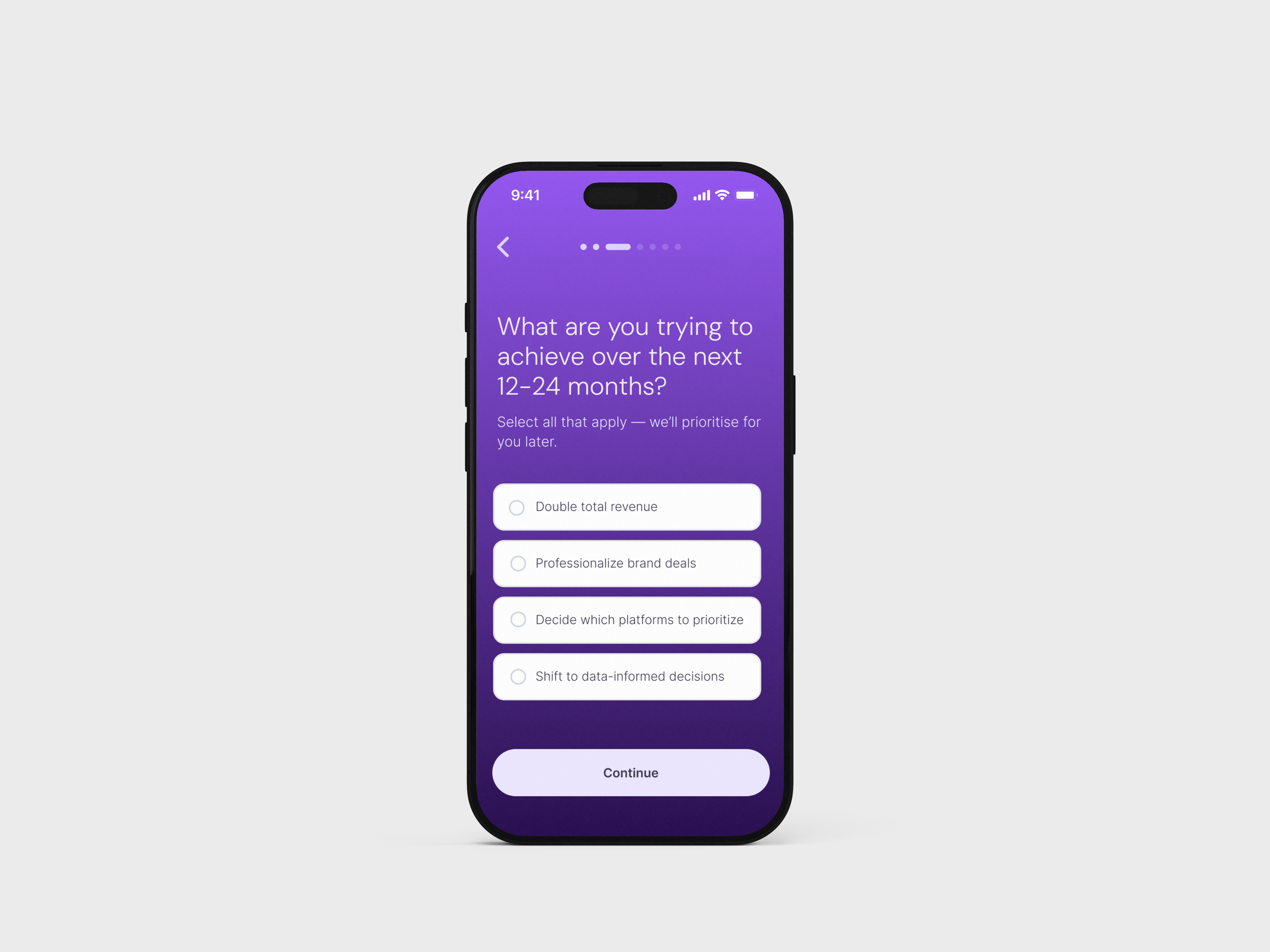
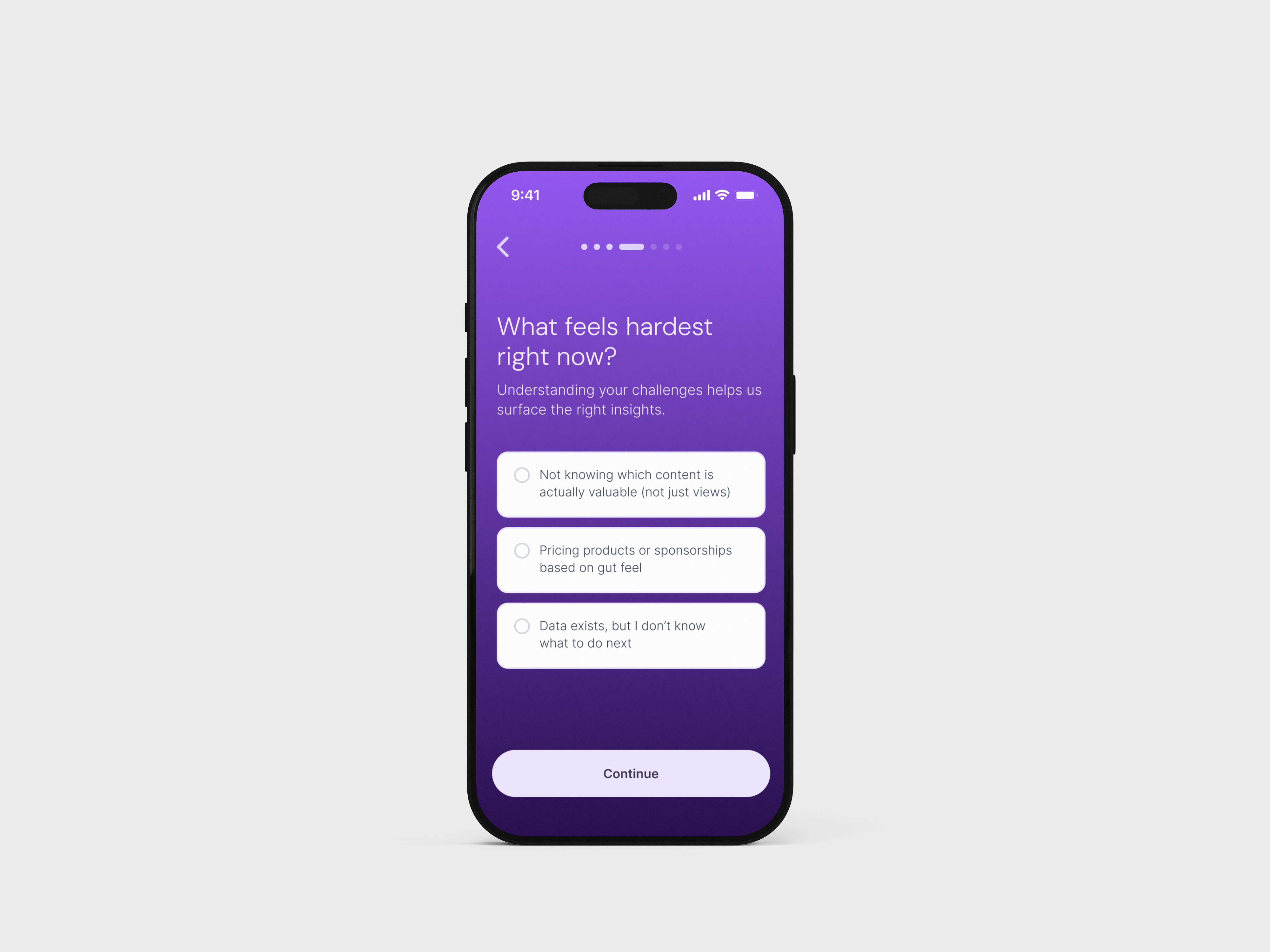
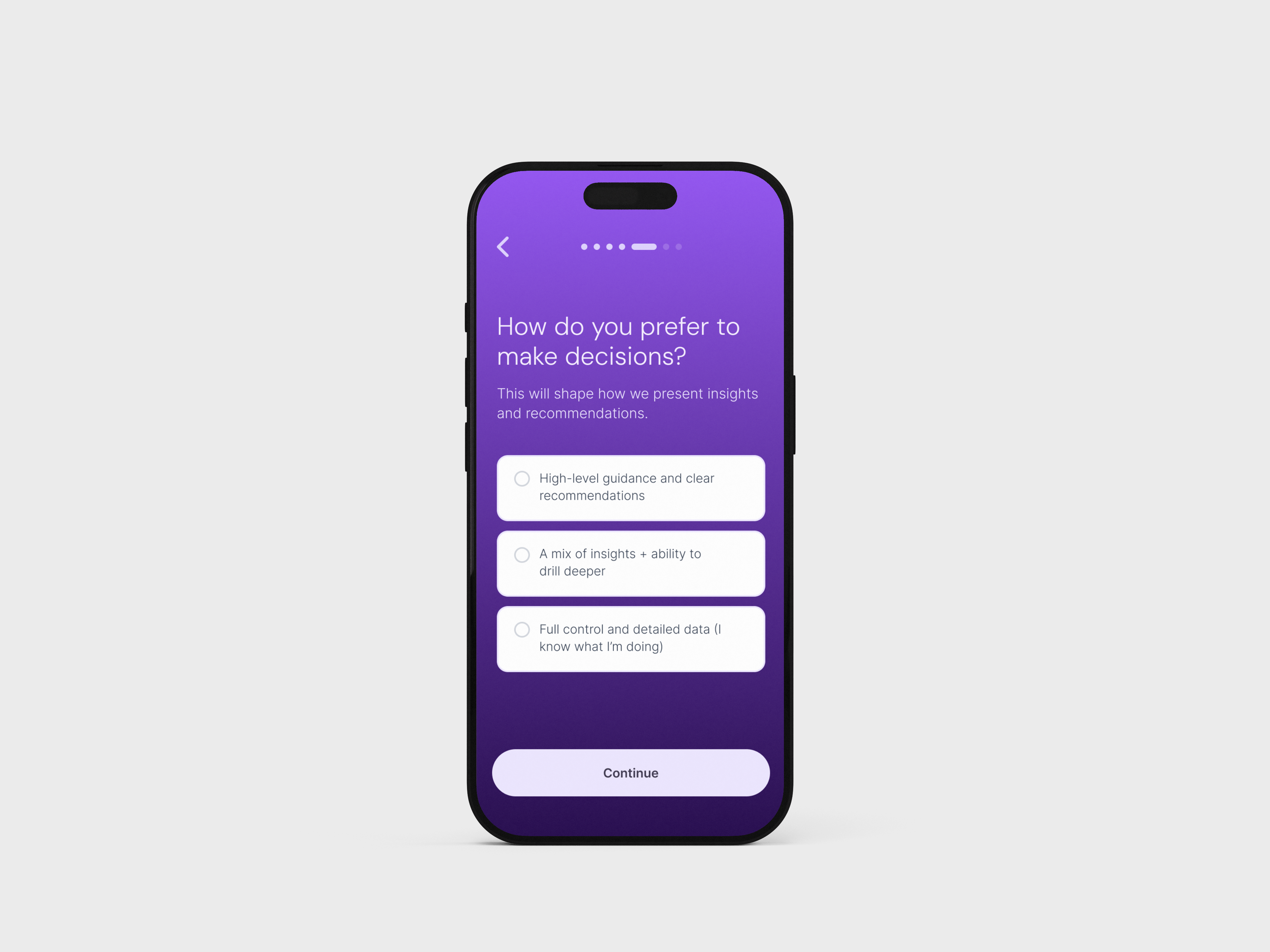
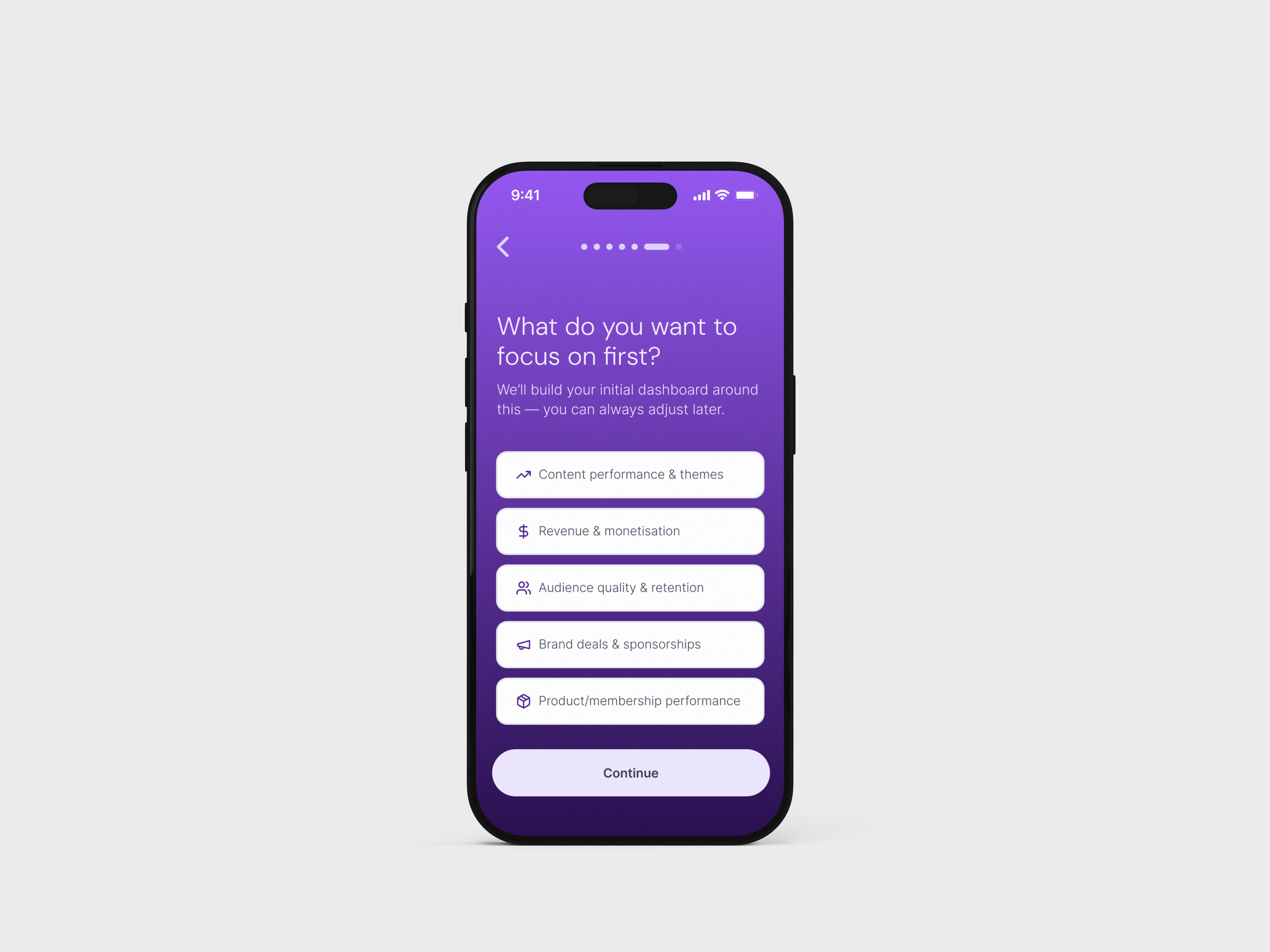
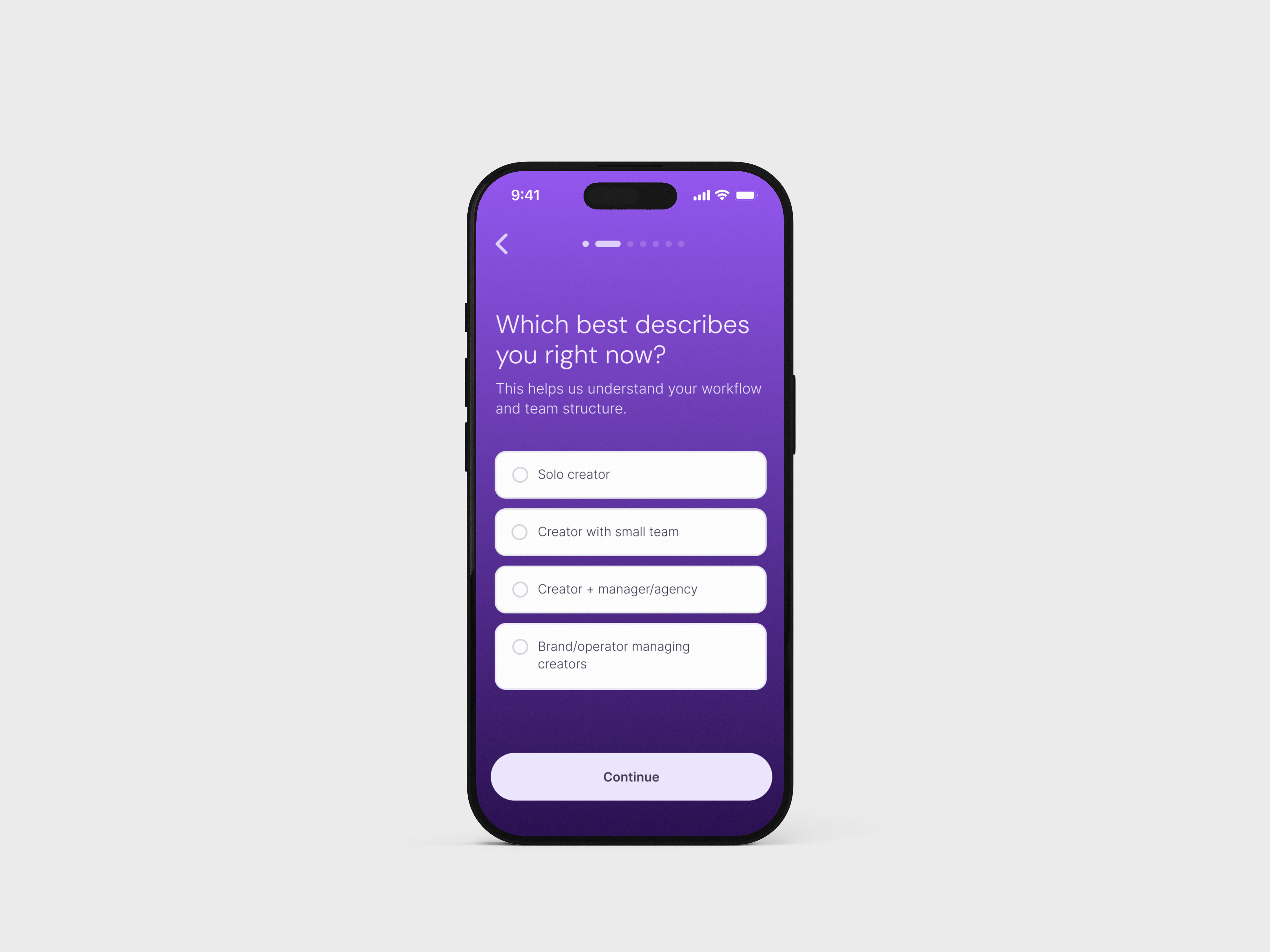
- Stage 2: Questionnaire Five focused, skippable questions that educate both Jess and GYST simultaneously.
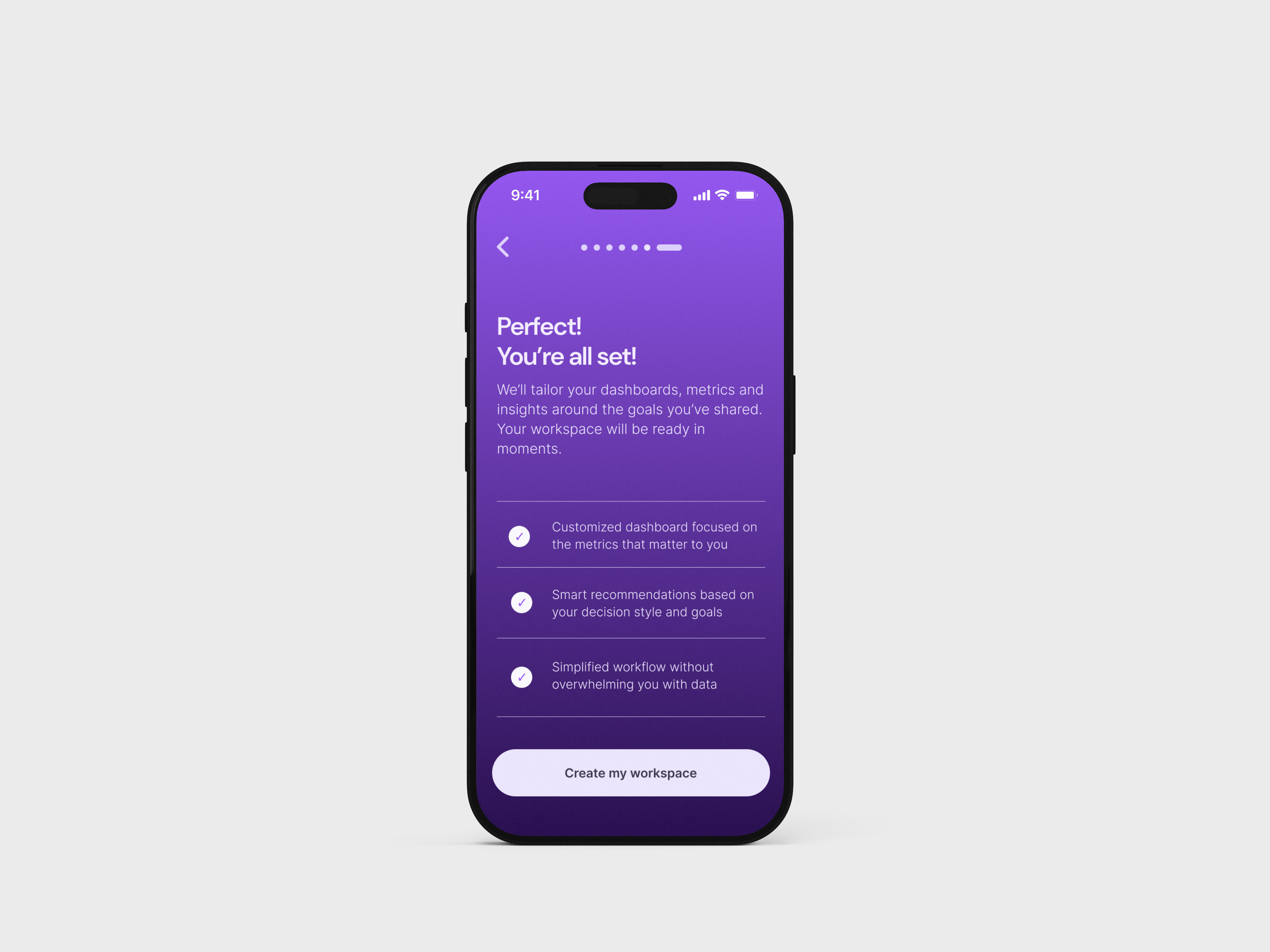
- Stage 3: Deep setup A meaningful overview, now informed by real and relevant data from her actual business.
Process
From friction map to functioning prototype
The process began with an AS-IS user journey map, identifying every moment where Jess would encounter confusion or friction. From there, a TO-BE storyboard was developed, tracing her improved path from discovery to her first genuine insight. This narrative became the project's foundational spine.
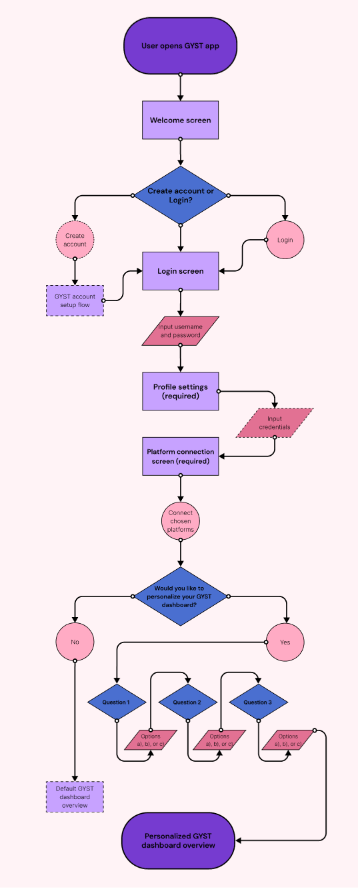
The storyboard was then translated into a functional user flow in Figma: decision points, skip logic, platform connection states, and error handling. In parallel, a handoff-ready design system was developed, complete with variables, tokens, semantic colour naming, light and dark variants.
Copy was treated as a design material. GYST's core promise ("speaks human, not spreadsheet") was carried through every line: buttons, error states, empty states, onboarding prompts. "Connect your platforms" instead of "Integrate data sources." "What matters most to you?" instead of "Select primary KPIs."
Deliverables
What was built
- Mid-fidelity Figma mockup of the full onboarding flow
- Handoff-ready design system with variables, tokens, and semantic colour naming
- Interactive ProtoPie prototype demonstrating the complete interface
- User journey maps (AS-IS and TO-BE)
- Persona documentation
Outcome
Making the complex feel human
Presented in February 2026, the redesign demonstrated how emotional trust and cognitive ease can fundamentally reframe a product's first impression. By treating onboarding as a conversation rather than a configuration task, the friction between Jess and her own data dissolves.
"I actually understand my business now."